"The artist is virtually in your home." — John Eargle
But what happens when that presence becomes unsafe?
"Welcome to Silent Hill.
We've been expecting you."
"This music is not safe to listen to."
Best experienced with headphones · Enter the sound
Original Trailer Audio · Rescore — Katerina Li
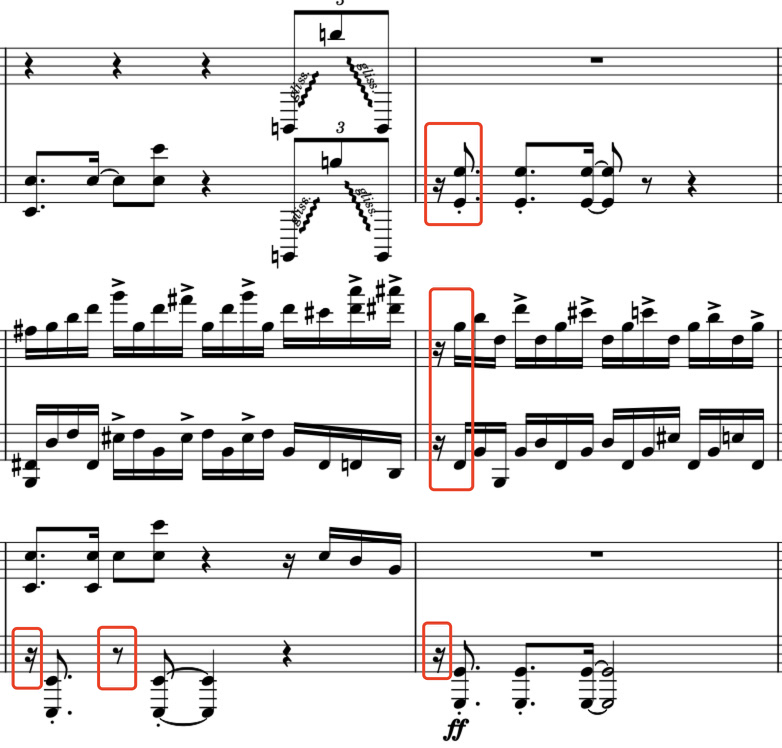
The right-hand melody descends chromatically from D through C♯, C, A♯ to G. Then it circles back up through F♯, G, A to A♯. It never lands on a stable tonic. The ear reaches for a cadence that never arrives.
The left-hand melody enters exactly one quarter-beat after the right. This creates a persistent near-alignment. Everything sounds almost correct, but never settles. Near-alignment is more psychologically effective than outright dissonance. The listener can hear that something is wrong but cannot locate where the error is.
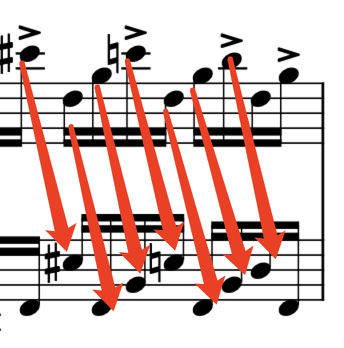
Harpsichord accents and drum impacts are placed one quarter-beat late throughout. The downbeat never fully lands. In certain passages a single beat receives two or three strikes instead of one, destabilizing the metric grid entirely. The rhythm cannot be trusted as a reference point. Just as Hinako cannot locate the threats inside the fog.
"If red lilies can bloom on rotten body parts, there is nothing wrong with dissonant notes co-existing."
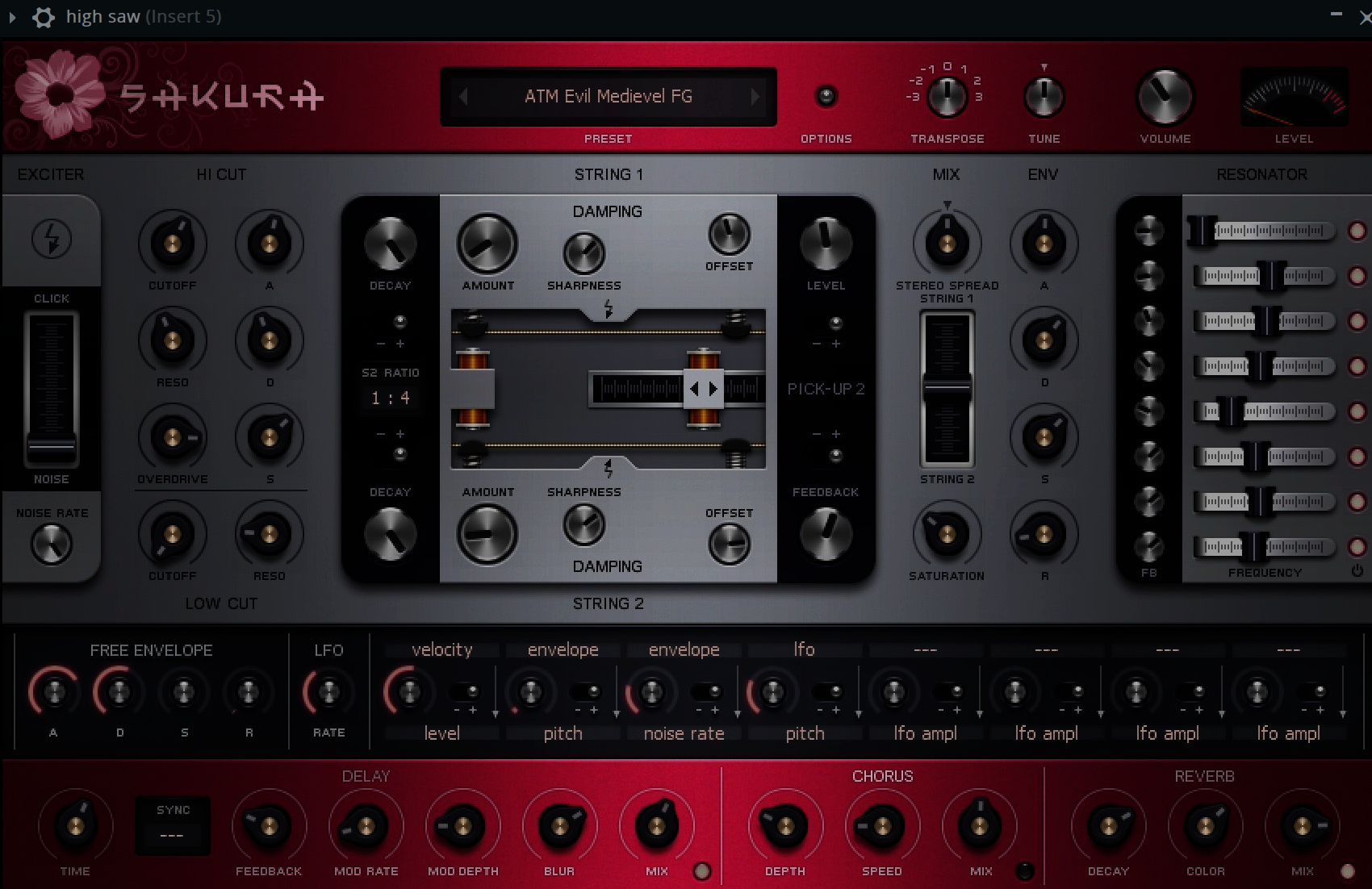
To fit the Japanese setting of the game, I used a harp-like Japanese instrument from Sakura, layered with high-register soprano voices. The choir layer is inspired by Yasuharu Takanashi's work in Jigoku Shoujo. It gives the music a disembodied quality, a voice with no clear physical source.
| Sakura, Japanese Harp | Primary melodic voice. Preset: ATM Evil Medieval FG. Carries the unresolved melodic line in the upper register. Its timbre sits between plucked string and breath. |
| High Soprano Choir | Harmonic texture and sustained pressure. References Takanashi's disembodied vocal style. The voices have no clear origin point in the stereo field. |
| Orchestra | Represents restraint and physical reality. The orchestra grounds the score in the world before it collapses. It is the last familiar sound the listener hears. |
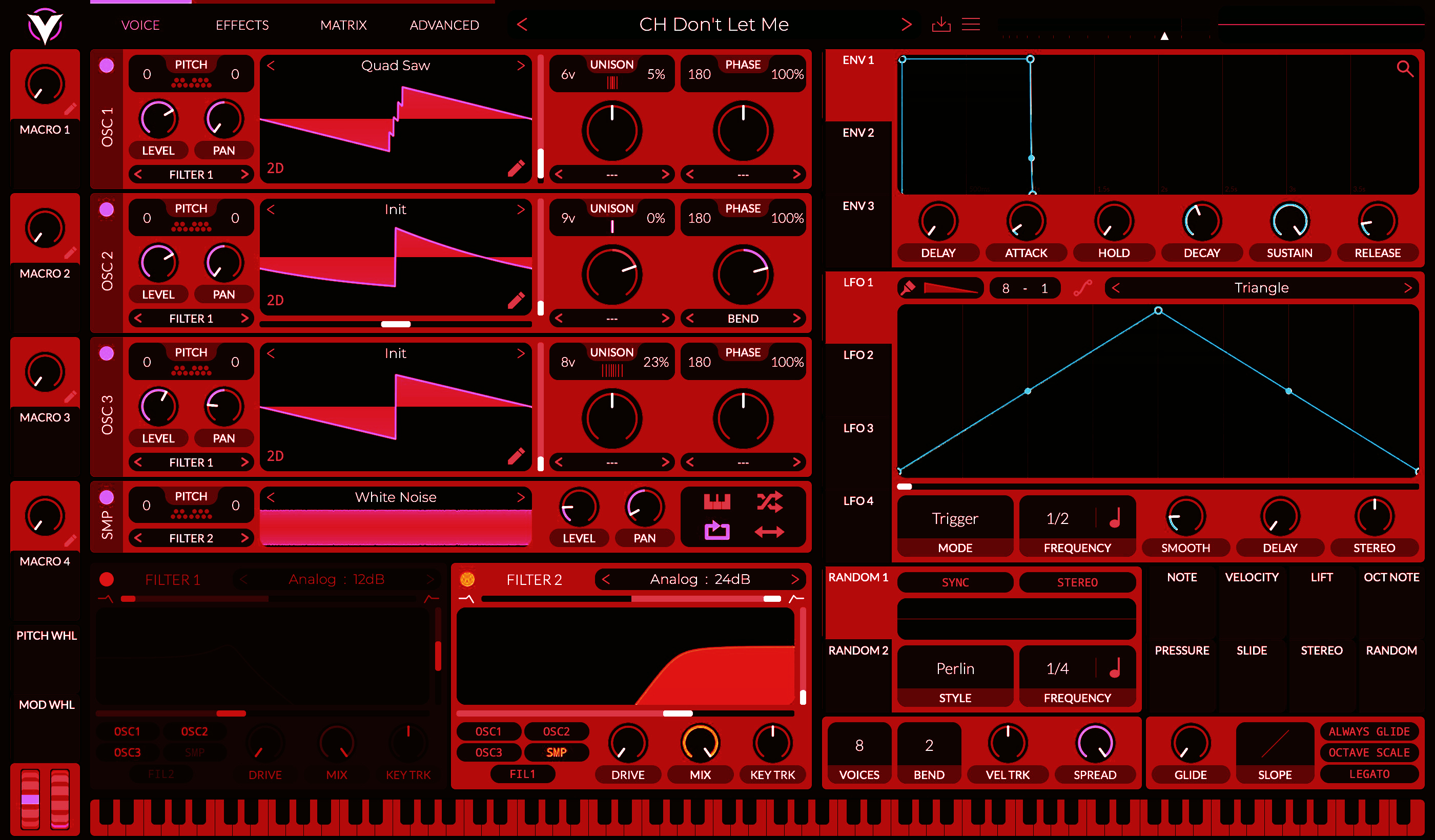
| Melodic Dubstep Synths | Vital synthesizer, preset: CH Don't Let Me. The drop resonates with surreal scenes filled with bizarre flowers and peeling human skin on a silent sea. This is where the genre collapses. |
I combined orchestra with electronic synthesizers because the development of the game itself builds toward that transition. The orchestra represents restraint and reality. The melodic dubstep drop resonates with the surreal, visually extreme scenes near the end of the trailer.
Sakura · ATM Evil Medieval FG · Native Instruments
Vital · CH Don't Let Me · Electronic Collapse Voice
Change is the core of this rescore. It happens in tempo, in space, and in sound processing.
The first musical idea came from the tempo change when Hinako enters the temple. There is a sudden acceleration to apply pressure. Before this moment, time feels stable and slow in the vacant graveyard. After it, the music no longer waits. The acceleration leads directly into the chase scene.
A clear spatial change happens when Hinako enters the sea, marking a move from an open physical space into a closed psychological world. I achieved this through mastering the two sections separately, treating them as two different acoustic environments entirely.
At the beginning, the cemetery scene uses wide stereo width, carefully placed instruments, and heavy reverb to create open space. During the chase in narrow alleys, the mix becomes drier. Stereo width narrows. Reverb is reduced. The music feels physically closer to the listener.
Graveyard
Chase / Temple
Digital Signal Processing
These DSP choices were made to remove the listener's sense of safety. Everything shifts, transitions, and changes unpredictably in both the music and the game.
I approached this project from a specific personal experience. Growing up with constant psychological pressure that was never named, I became sensitive to tension that looks normal but feels wrong. Situations that appear stable on the surface while something underneath is about to break. That is the emotional starting point for the entire score.
Silent Hill f works on the same logic. Its world is visually beautiful. Fear is not announced. It accumulates. The score was built to reflect this. Music that sounds almost normal. A space that is almost stable. Rhythm that almost lands.
Every technical decision in this score reflects that same logic. The late downbeat is not an error. The unresolved harmony is not a mistake. The reverb that never settles is not accidental. These are tools designed to remove the listener's sense of ground. The score does not illustrate the horror. It enacts the mechanism of it.
Thank you for staying with us.
You may leave whenever you want.
But can you remember where the exit was?